

Tesla Model X Attempts To Launch Full-size Glider Into The Air | Loungtastic

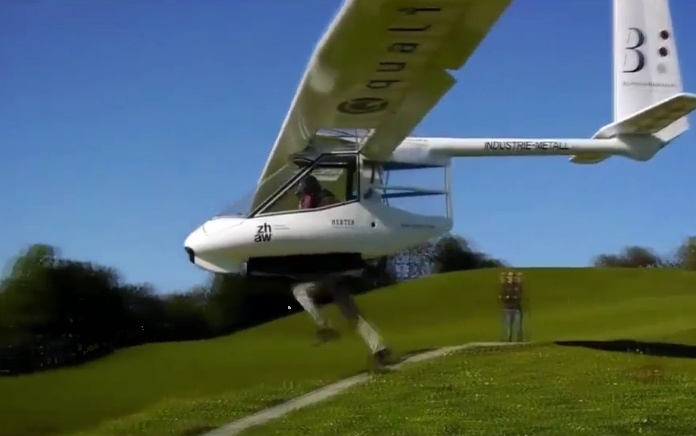
They were actually not the first to achieve a truly zero emission flight and launch since Siemens managed to launch and tow a glider with their all-electric plane prototype earlier this year.
Nonetheless, it's an interesting use of the Model X.
They produced an admittedly "unprofessional video" of the launch, but we get to see it from the perspective of inside the Model X. They wrote in the description:
"This is not a professional video, but one of our flyer, Jonas Schwengler (thanks, Jonas!), documented the start from the back seat of the Tesla. Interestingly, the acceleration was strong and completely even on uneven and slightly damp grass. The aircraft is an ASK-21 double seat. Pro start with a 370m rope at 250-320m depending on the wind you need about 3% of the battery charge."
Here's the clip (the action starts about two minutes in):

Beautiful!
Now this is some serious flying!
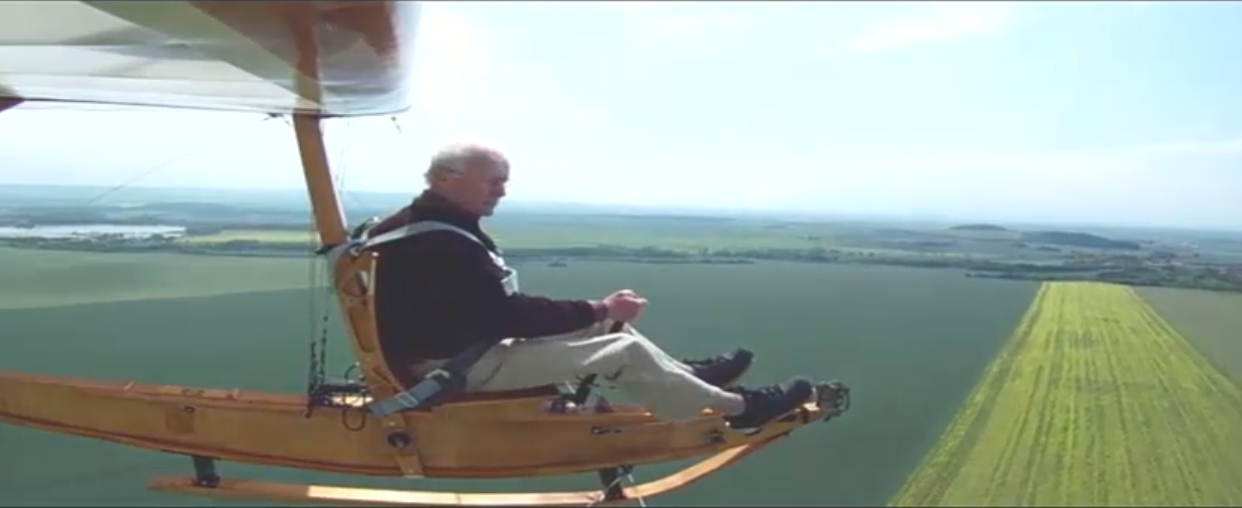
Now this is some serious flying!
Aviation Home 🛬↘
SEATTLE - A band of amateur scientists selected...
by the FBI to look for clues in the world's most infamous skyjacking may have found new evidence in the 45-year-old case.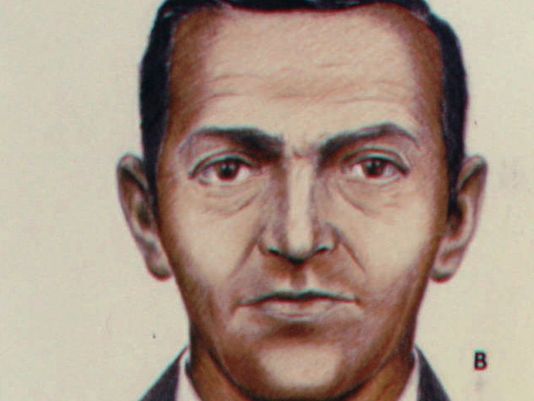
They're asking for the public's help because of potential leads that could link the hijacker known as D.B. Cooper to the Puget Sound aerospace industry in the early 1970s.
"These are what they call rare earth elements. They're used in very narrow fields, for very specific things," said Tom Kaye, lead researcher for the group that calls itself Citizen Sleuths.
Kaye said the elements were rarely used in 1971, during the time of Cooper's daring leap with a parachute from the passenger jet.
One place they were being used was for Boeing's high-tech supersonic transport plane, which was being developed with government funding in the 1960s and 1970s.Kaye wonders if Cooper could have been a Boeing employee or a contractor who wore the tie to work. "The tie went with him into these manufacturing environments, for sure, so he was not one of the people running these (manufacturing machines). He was either an engineer or a manager in one of the plants," Kaye said. Kaye says Boeing was developing cutting edge monitors, like radar screens, that used some of the elements found on the tie.Kaye says the public's help is needed, particularly from old-timers with experience in the aerospace industry in the Pacific Northwest. Aviation Home 🛬↘The scientists would like to hear theories from the public on what those materials could have been used for. They hope the information can help build a profile of Cooper.
"Someone may be able to look at those particles and say 'Oh my gosh. I know what that means having those particles on the tie,' Kaye said.Tipsters can reach the group through the "contact" tab on the Citizen Sleuth website.A Russian SU-72 fighter jet intercepted a US Navy aircraft Monday over the Black Sea.
Aviation Home 🛬↘A Russian Su-27 fighter jet has intercepted a US Navy EP-3E Aries plane over the Black Sea near Russian airspace and escorted it away in a safe manner, the Russian Defence Ministry said.
Meanwhile, the US Navy announced that a US reconnaissance aircraft was intercepted earlier on Monday by a Russian fighter jet while flying in international airspace over the Black Sea, Xinhua news agency reported.
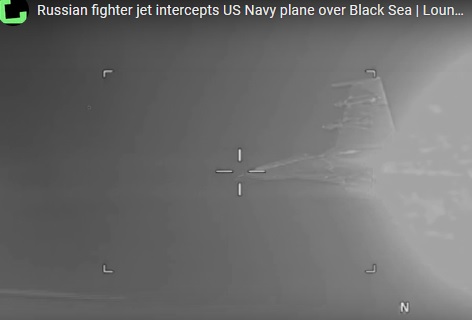 Here we go...
The US reconnaissance aircraft was spotted approaching Russia’s airspace and was immediately identified by the Su-27 fighter jet “at a safe distance,” Russian news agencies reported, citing a defence ministry statement.
After reporting back to the communications intelligence unit, the fighter jet escorted it away from the Russian airspace “in compliance with all security and safety requirements,” it said.
According to the Russian Defence Ministry, the fighter jet returned to its home base after the US plane altered its flight course away from Russian airspace.
Aviation Home 🛬↘The US Navy, in a statement, called the interaction as “determined to be unsafe”, saying the Russian SU-27 conducted “a high speed pass directly in front of the mission aircraft, putting at risk the pilots and crew”.
Also on Monday, a Pentagon spokesperson said that the Russian jet came “very, very close” to the US EP-3 aircraft, adding that it made an additional pass after activating its afterburners to create more turbulence.
There was no communication between the two planes and the encounter lasted about 25 minutes, Spokesperson Eric Pahon told reporters at the Pentagon.
The Pentagon said that the EP-3 was conducting routine operations while the encounter happened, not provoking the Russian activity.
VIDEO: Russian fighter jet intercepts US Navy plane over Black Sea...Comment below video


.jpg "Chuck Yeager weighs in: F-22 / F-35!")